Recommendations from Serbia





 10 ℃
10 ℃

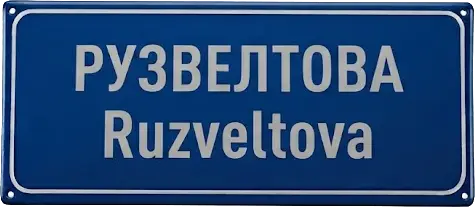
Roosevelt Street
Roosevelt Street – History, Landmarks, and the Development of a Part of Belgrade
Roosevelt Street is one of Belgrade's prominent thoroughfares, situated in an area that connects the central city zones with parts of Palilula and Zvezdara. Although today it is known for its heavy traffic, tram tracks, public transportation, and numerous commercial establishments, its past reveals fascinating details about the development of Belgrade, the expansion of the city, and the changes its streets have undergone.
Former names, the Monument to Vuk, and the New Cemetery located along this street occupy a special place in the history of Roosevelt Street. These locations testify to different periods of the capital's development, from the formation of urban neighborhoods in the 19th century to the construction of modern Belgrade during the 20th century.
How Did Roosevelt Street Get Its Name?
The names of Belgrade's streets often reflect historical events, famous figures, and political changes. Roosevelt Street is a good example of such a practice, as throughout its history it bore names directly connected to the appearance and purpose of this part of the city.
Before receiving its current name, the street was known as Grobljanska (Cemetery Street), which was linked to its location and the route leading to the New Cemetery. During certain periods, it was also called Goethe Street, after the German writer Johann Wolfgang Goethe. In 1946, it was named Roosevelt Street in honor of Franklin Delano Roosevelt, the President of the United States from 1933 to 1945.
Franklin D. Roosevelt played a major role in 20th-century history, particularly during the Great Depression and World War II. As US President, he led the country through a period of immense economic and political challenges and was one of the Allied leaders during the war. The name by which the street is known today recalls a time when public space names were changed in accordance with international relations and historical circumstances.
The name change from Grobljanska to Roosevelt Street also represents part of the broader history of Belgrade after World War II, when numerous streets received new names, frequently to honor figures and events that marked the wartime and postwar periods.
Roosevelt Street and the Former Appearance of Belgrade
The development of the area through which Roosevelt Street passes is connected to the expansion of Belgrade beyond its old core. Throughout the 19th century, the city grew gradually, and its former peripheral parts acquired new roads, residential buildings, and public amenities.
The area toward present-day Palilula and Zvezdara changed as the population grew and urban infrastructure developed. Streets that once had local significance became important connections between different parts of the city. The development of public transport and the construction of new buildings contributed to making this part of Belgrade increasingly connected to the center.
The former name, Grobljanska, is particularly interesting because it shows how closely individual streets were linked to specific facilities in their surroundings. In this case, the New Cemetery, which became one of the city's significant spaces in the late 19th century, played a major role.
Over time, the area became urbanized, and the street acquired a more modern appearance. The construction of residential buildings, the growth of commerce, and the expansion of the traffic network transformed Roosevelt Street into an important urban thoroughfare that continues to connect different parts of Belgrade today.
The New Cemetery – An Important Part of Roosevelt Street's History
One of the most significant historical entities connected to Roosevelt Street is the New Cemetery. It was opened on August 16, 1886, at a time when Belgrade was growing and the old cemetery at Tašmajdan could no longer meet the city's needs.
The initiative to establish the new cemetery is associated with Vladan Đorđević, a physician, politician, and the then-President of the Belgrade Municipality. The idea was to build an orderly space intended for burials, with properly organized plots and paths, modeled after contemporary European cemeteries.
Over time, the New Cemetery outgrew its original purpose and became a significant site of Serbian cultural and national history. Numerous prominent figures from politics, science, literature, art, and public life rest here. Of special value are the Alley of Greats, the Alley of Meritorious Citizens, historical tombs, and numerous sculptural works.
In 1983, the complex was declared a cultural-historical asset of great importance to the Republic of Serbia. Its architecture, monuments, and tombs represent a unique open-air museum through which different periods of Belgrade and Serbian history can be traced.
The location of the New Cemetery also influenced the historical identity of the street itself. The former name Grobljanska remained a trace of the time when this very location was one of the area's main landmarks.
The Monument to Vuk and the Cultural Significance of This Part of the City
At the intersection of Roosevelt Street and King Alexander Boulevard stands one of the famous symbols of Belgrade – the monument to Vuk Stefanović Karadžić. Erected in honor of the reformer of the Serbian language and alphabet, the monument represents an important part of the capital's cultural history.
The monument is the work of sculptor Đorđe Jovanović and was unveiled with ceremony in 1937, marking the 150th anniversary of Vuk's birth. The idea of erecting it had existed since 1920, but it took several years to raise funds, craft the sculpture, and determine the appropriate location.
Vuk Karadžić is depicted in a seated position, with a book in hand as a symbol of knowledge, literacy, and enlightenment. His work on the reform of the Serbian language and Cyrillic script left a profound mark on the development of Serbian culture, giving the monument significance that transcends the local character of this intersection.
In 1965, the monument was designated as a cultural asset. Cyril and Methodius Park, where it is located, serves as a meeting place and an important orientation point for Belgrade residents. The proximity of King Alexander Boulevard, educational institutions, and a public transport station has made this area one of the city's most recognizable parts.
The Cemetery of the Liberators of Belgrade – Remembering 1944
Another significant historical location near Roosevelt Street is the Cemetery of the Liberators of Belgrade, located across from the New Cemetery at the corner of Roosevelt and Preradović Streets.
This memorial complex is dedicated to the fighters who fell during the liberation of Belgrade in October 1944. It houses the graves of members of the People's Liberation Army of Yugoslavia and the Red Army who participated in the battles to liberate the city during World War II.
The cemetery was opened on October 20, 1954, on the tenth anniversary of the liberation of Belgrade. More than 2,000 fighters rest within the complex, and the space is arranged as a place of remembrance for the events that marked the capital's history.
This location reminds us that the history of Roosevelt Street is linked not only to urban development and street name changes, but also to important events from the recent past. Memorial spaces that preserve the memory of people and events significant to Belgrade's history are situated in the immediate vicinity.
Roosevelt Street Today
Modern Roosevelt Street serves as an important traffic connection between central Belgrade and other urban areas. Tram lines, intersections, and the proximity of major city thoroughfares enable connections to various parts of the capital, while residential buildings, educational institutions, business spaces, and numerous service activities are located along the street and in its vicinity.
Although today's Roosevelt Street is primarily known for its bustling urban life, its surroundings preserve important traces of the past. The New Cemetery, the Cemetery of the Liberators of Belgrade, and the Monument to Vuk represent historical and cultural focal points that give this part of the city special significance.
Alongside historical landmarks, Roosevelt Street and its surroundings feature restaurants, cafes, shops, and other businesses used daily by residents and visitors of this part of Belgrade. On the 011info.com portal, you can explore local shops and business establishments in Roosevelt Street, find information about their offerings, and discover the various contents located at this significant city address.
From the former Grobljanska to today's Roosevelt Street, the history of this street bears witness to the changes Belgrade has undergone for over a century. Its names, monuments, and historical locations form part of the broader story of the capital's development and the people who shaped its identity.