Recommendations from Serbia





 1 ℃

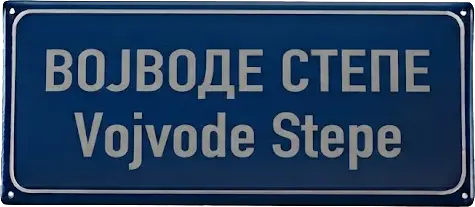
Vojvode Stepe
Vojvoda Stepa Street – History and Development of One of Belgrade's Most Famous Neighborhoods
Vojvoda Stepa Street is one of the most recognizable thoroughfares in Voždovac and a vital part of the history of Belgrade's expansion toward the south. Its past is tied to the development of a former suburb, the lives of old Voždovac families, the arrival of the tram, and the area's gradual transformation from a predominantly rural environment into a densely populated part of the capital.
Today, residential buildings, older family homes, shops, educational institutions, and various businesses line the street. However, behind its modern appearance lies a story of a time when Voždovac had only a few dozen houses, when residents mainly engaged in agriculture and dairy farming, and when craft workshops and taverns served as important centers of social life.
The street's name preserves the memory of one of the most prominent Serbian military commanders, while its development illustrates how Belgrade and the lives of its inhabitants have changed over the past century.
Who is Vojvoda Stepa Street Named After?
Vojvoda Stepa Street is named after Vojvoda (Field Marshal) Stepa Stepanović, one of the most famous Serbian military commanders and a participant in the liberation wars of the early 20th century.
Stepa Stepanović was born in 1856 in Kumodraž, a settlement located today within the municipality of Voždovac. His origins further connect this military leader with the history of the broader area through which the street bearing his name runs.
During his military career, he fought in the Serbo-Turkish Wars, the Serbo-Bulgarian War, and the Balkan Wars, and he particularly distinguished himself during World War I. He commanded the Second Army of the Serbian military at the Battle of Cer in 1914, one of the most significant victories for the Serbian forces in that war. For his military service, he was awarded the rank of vojvoda (field marshal), the highest military rank in the Serbian army at the time.
The Battle of Cer is remembered as the first major Allied victory of World War I. The success of the Serbian army under the command of Stepa Stepanović held immense military and symbolic importance, and the field marshal became one of the defining figures of national history.
Stepa Stepanović passed away in 1929 in Čačak. Today, streets and other public spaces across Serbia bear his name as a lasting reminder of his military service and his role in the country's history.
Voždovac in the Late 19th Century – From a Rural Settlement to an Urban Suburb
The history of Vojvoda Stepa Street cannot be separated from the development of Voždovac, an area that looked vastly different during the 19th century compared to today's urban neighborhood.
As Belgrade gradually expanded outward from its historical core, the area south of the then-city retained a predominantly rural character. The population engaged in agriculture, livestock breeding, and milk production, and houses were scattered along the roads connecting the settlement to Belgrade and neighboring villages.
According to historical data cited by the City Municipality of Voždovac, 42 houses were built in this area in 1896. By 1914, that number had grown to 95 homes, inhabited by approximately 600 residents. These figures demonstrate how small Voždovac was at the time compared to the neighborhood of today.
Vojvoda Stepa Street was an important part of that early settlement. It housed around 20 craft workshops—including blacksmiths, wheelwrights, and farriers—along with several taverns and three brickyards. This structure reflects a lifestyle where trade, commerce, and agriculture were deeply intertwined.
Artisans provided services to the local population, taverns served as places of gathering and rest, and brickyards contributed to the production of building materials needed for the settlement's growth.
Thus, the street played an important role long before Voždovac became part of the broader urban area. It was a place of daily life, work, and trade, and its significance grew alongside the population and the development of surrounding settlements.
The Arrival of Electricity and Trams Transformed Voždovac
The dawn of the 20th century brought significant changes to the lives of Voždovac residents. The settlement gradually acquired infrastructure that was previously characteristic mainly of central Belgrade.
According to the historical overview provided by the City Municipality of Voždovac, the water supply and electrical grid arrived in the area in 1912. These infrastructural projects represented a major step in modernizing the settlement and laid the groundwork for its further development.
A particularly momentous event was the introduction of tram service. The first tram on the line from Slavija toward Voždovac began operating in 1926. This made the connection to central Belgrade simpler and more reliable, impacting residents' daily lives and driving the gradual urbanization of the area.
Better connectivity with the city spurred the growth of commerce, trades, and new residential areas. People could commute more easily to jobs in central Belgrade, while conditions were simultaneously created for new residents to move in.
Vojvoda Stepa Street became an increasingly vital part of this process. The former expanse of smaller houses, craft shops, and taverns gradually changed, and Voždovac began to take on the character of an urban suburb.
Between the Two World Wars – The Beginning of Planned Construction in Voždovac
Between World War I and World War II, Belgrade continued to expand, and Voždovac became one of the primary areas for the development of new residential neighborhoods.
During this period, the Civil Servants' Colony (Činovnička kolonija), the Queen Maria Suburb (Predgrađe kraljice Marije), and other settlements emerged, progressively altering the landscape of the wider area. Construction of the Civil Servants' Colony began in 1931, conceived as a neighborhood intended for state employees.
The layout of these new residential units introduced a different approach to spatial planning. Instead of scattered houses lining rural paths, more organized street networks and residential zones appeared. Nonetheless, agriculture gradually lost its former importance, while artisans, merchants, and innkeepers continued to play a key role in the local economy.
Vojvoda Stepa Street remained one of the main developmental axes of this part of the city. Its connections to other roads enabled neighborhood expansion and facilitated the movement of people and goods.
The growth of surrounding settlements helped make Voždovac an increasingly important part of Belgrade, and the street named after Vojvoda Stepa continued to link the various sections of this urban whole.
Post-War Development and Distinctive High-Rises
Following World War II, Belgrade entered a period of intensive urbanization. Population growth demanded the construction of new housing, expansion of infrastructure, and improvements to public transit.
Over the subsequent decades, Voždovac gained new residential buildings and amenities, while former houses and small shops were increasingly replaced by structures typical of a modern city.
One of the most recognizable landmarks of Vojvoda Stepa Street became the three large residential high-rises built during the 1970s. Their construction was part of a broader vision to redesign the street's urban layout and create a modern urban center in Voždovac.
According to historical reviews of this district's development, the original plan called for six high residential towers, but three were ultimately built. Their height and positioning turned them into recognizable landmarks, visible even from distant parts of the neighborhood.
These buildings serve as an example of the urban planning ideas that marked the second half of the 20th century, when large apartment blocks and methodically organized urban spaces were a key component of Belgrade's growth.
The construction of new buildings altered the street's appearance, but it did not erase its importance as Voždovac's primary transit and commercial artery.
Vojvoda Stepa Street Today
Today, Vojvoda Stepa Street is one of Voždovac's main thoroughfares, connecting different parts of the municipality and providing access to numerous residential, educational, and business facilities.
Its history is visible in the blend of older houses, buildings from various eras, and contemporary structures. This varied appearance testifies to the neighborhood's gradual evolution from a modest rural environment into one of Belgrade's densely populated districts.
Alongside its historical and traffic significance, the street is part of the daily lives of a large number of residents. Along its length are restaurants, cafes, shops, craft workshops, and various service industries catering to the needs of the local population.
On the portal 011info.com, you can explore businesses and venues on Vojvoda Stepa Street, find restaurants, cafes, and other services, and discover what this part of Voždovac has to offer.
From former craft shops and taverns to modern business spaces and hospitality venues, the street's development reflects the changes experienced by Belgrade and its citizens. At the same time, its history preserves the memory of Field Marshal Stepa Stepanović and bears witness to the creation and growth of one of the city's most recognizable urban areas.